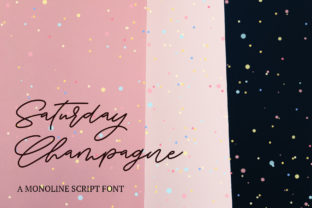
Saturday Champagne Font for Web Design
In the crowded digital landscape, typography is often the first element that communicates a brand’s personality before a user reads a single word of copy. As web designers and UI creators, we constantly search for typefaces that balance aesthetic appeal with functional clarity. Saturday Champagne emerges as a compelling option in this space, offering a fancy and vibrant script style that can elevate digital experiences without sacrificing usability. This font is not merely a decorative element; it is a strategic tool for establishing visual hierarchy and emotional connection in web design.
Understanding the Visual Personality of Saturday Champagne
Saturday Champagne belongs to the Script Amp category, characterized by its fluid strokes and elegant curves. Unlike rigid geometric sans serif fonts, this typeface carries a handwritten warmth that feels personal and inviting. For digital product creators, this distinction is crucial. When building a brand-focused web experience, the choice between a cold, corporate typeface and a warm script like Saturday Champagne can define the entire tone of the user journey.
The vibrancy of this font makes it particularly suitable for projects that require a touch of luxury or creativity. It performs exceptionally well in contexts where the goal is to evoke feelings of celebration, sophistication, or artisanal quality. However, its success in web design depends on how strategically it is deployed within the layout. It is not a workhorse for body text but a spotlight performer for key messages.
Strategic Placement in Digital Layouts
To maximize the impact of Saturday Champagne, it is essential to understand where it fits best within a responsive web structure. Using a decorative display font for long paragraphs can hinder readability and increase bounce rates. Instead, consider these high-impact applications:
- Hero Sections: Use Saturday Champagne for main headlines on landing pages to immediately capture attention and set an emotional tone.
- Call-to-Action Areas: Short, punchy phrases in buttons or adjacent headers can benefit from the font’s energetic vibe, encouraging clicks through visual interest.
- Brand Logos: For online stores and boutique brands, this script font can serve as the cornerstone of logo design, creating a memorable mark that translates well across social media graphics and website headers.
- Section Dividers: Use small accents or subheadings in blog graphics and course pages to break up content and guide the user’s eye.
By restricting the use of Saturday Champagne to these specific areas, you maintain a clean visual hierarchy. Users can quickly scan the page, identifying key information while enjoying the aesthetic flourishes that make the site feel premium and curated.
Readability and Responsive Considerations
One of the biggest challenges with script fonts is ensuring they remain legible across various devices. On large desktop monitors, the intricate details of Saturday Champagne shine. However, on mobile screens, these same details can become blurry or indistinct if the font size is too small. As a UI designer, you must test the font at different breakpoints.
For mobile responsiveness, avoid using Saturday Champagne for navigation menus or small button labels unless the letter spacing is adjusted significantly. It thrives in larger sizes where the connections between letters are clear. When placing text over image overlays, ensure there is sufficient contrast. A light-colored script on a busy background can disappear, so consider using solid color blocks or subtle shadows to enhance visibility without compromising the font’s elegance.
Effective Font Pairing for Brand Identity
A standalone script font rarely carries an entire website. The power of Saturday Champagne is unlocked when paired with complementary typefaces. For a modern typography approach, pair it with a clean sans serif font for body copy. This combination creates a balanced editorial design feel, where the script provides personality and the sans serif ensures readability.
Alternatively, for a more traditional or luxurious brand identity, consider pairing Saturday Champagne with a classic serif font. This works well for coaching websites, wedding planners, or high-end online stores where trust and tradition are key selling points. The contrast between the flowing script and the structured serif creates a sophisticated rhythm that guides the user through the content smoothly.
- Contrast is Key: Ensure the paired font has a different weight and structure to avoid visual competition.
- Limit Variety: Stick to two, maximum three, typefaces per project to maintain a cohesive brand identity.
- Consistent Hierarchy: Use the script for H1 and H2 tags, and the supporting font for H3, body text, and captions.
Technical Implementation and Licensing
Before integrating Saturday Champagne into a client project or digital template, verify the technical specifications. Check for available webfont formats such as WOFF and WOFF2, which are optimized for fast loading times on websites. Slow-loading fonts can negatively impact SEO and user experience, so efficient file sizes are critical.
Additionally, review the included styles and alternates. Some script fonts offer swashes or ligatures that can add unique flair to logos or headers. Ensure that the multilingual support meets your project’s needs if you are designing for a global audience. Finally, always adhere to commercial font licensing agreements. Whether you are building a SaaS platform, an e-commerce store, or a personal portfolio, proper licensing protects both you and your client from legal issues and supports the creators behind the design assets.
In conclusion, Saturday Champagne is more than just a pretty typeface. It is a versatile design asset that, when used with intention, can significantly enhance the perceived value of a digital product. By focusing on readability, strategic placement, and thoughtful pairing, web designers can create engaging, conversion-focused layouts that resonate with users on both an emotional and functional level.